

“When Children Don’t Fit the System”: Why Emotional Wellbeing Must Come Before Learning
Many children are walking into school every day carrying invisible struggles — anxiety, overwhelm, low confidence and emotional exhaustion that can make learning feel impossible. For some families, finding the right support can feel like an uphill battle, especially when children do not fit neatly into traditional systems or expected pathways.
Founded in South Woodham Ferrers in 2022, Emotionally Healthy Minds CIC was created to bridge that gap. Through emotionally informed tutoring, counselling, coaching and family support, the Essex-based organisation helps children and young people feel understood, rebuild confidence and reconnect with learning.
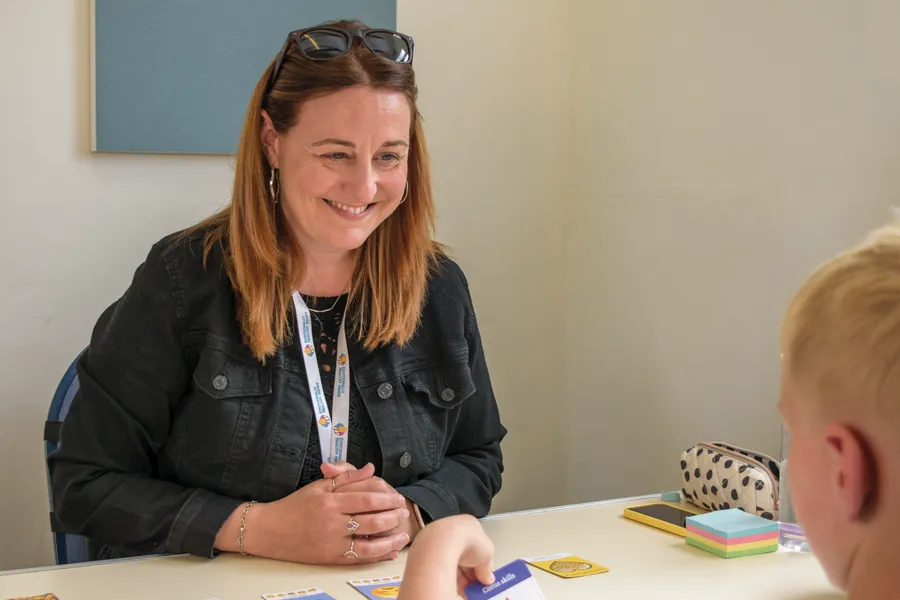
Sitting down with founder Sarah Petherick, we explore why emotional wellbeing and education are so deeply connected, what today’s children are really struggling with and why emotionally informed support matters now more than ever.
What inspired you to start Emotionally Healthy Minds?
As a class teacher, I saw so many children struggling in school. Some were anxious, overwhelmed or lacking confidence. Others were neurodivergent or masking so well that their struggles were often missed completely.
I also met exhausted parents fighting hard to get support for their children, whilst often feeling unheard and unsupported themselves.
Working in schools, I always wanted to go the extra mile and be everything every child and parent needed, but the reality is that schools are under huge pressure and cannot always provide the level of individual emotional support some children need to truly thrive.
It can often feel like emotional wellbeing and education are treated separately, when in reality, they are deeply connected. Many children are trying their best to learn whilst carrying huge levels of anxiety, overwhelm or emotional stress underneath the surface.
School can be an amazing place, both of my own children are there, but for some children it can feel overwhelming and they may need extra emotional or educational support to help them thrive.
I wanted to create something different, a place where all children could feel safe, understood and supported both emotionally and academically.
What services does Emotionally Healthy Minds provide and who do you support?
EHM provides tutoring, emotion coaching, counselling and parental support for children, young people and families across Essex.
We support children from 4–18, especially those struggling with anxiety, emotionally based school avoidance (EBSA), low confidence, burnout, emotional dysregulation and neurodivergent needs such as autism, ADHD and PDA.
Some children come to us needing academic support to rebuild confidence in learning, whilst others need emotional support through coaching or counselling before they are able to engage academically again.
Alongside supporting children, we also work closely with parents, schools and local authorities.
Why was it important to create a more holistic approach?
Children do not exist in separate boxes and neither do the challenges they face. Emotional wellbeing, confidence, behaviour and learning are all deeply connected, so it never made sense to support only one part of the child whilst ignoring the rest.
A child may appear disengaged academically, but underneath there may be anxiety, burnout, sensory overwhelm or low self-esteem affecting their ability to learn. Equally, when children begin to feel emotionally safe and understood, we often see confidence and engagement with learning naturally begin to grow again.
That is why EHM brings together tutoring, coaching, counselling and parental support in a more joined-up and relational way.
What are some of the most common challenges families are facing when they come to EHM today?
For some children, it is about gently reigniting that spark for learning again. For others, the struggles run much deeper and they need emotional support through coaching or counselling before they are able to engage academically.
Parents often tell us they feel exhausted from fighting for support. Some children are masking all day at school and then falling apart at home. Others have completely lost confidence in themselves and their love of learning.
I think many people still underestimate how exhausting it can be for some neurodivergent children to navigate environments that do not fully meet their needs. Many children spend huge amounts of energy masking, coping and trying to fit in.
By the time families reach us, they often just want somebody to truly understand their child and what they need.
What are some of the most powerful or rewarding changes you’ve seen in children and families through the work EHM does?
Ah, there are so many.
Watching a child who once refused to enter a room begin to feel safe enough to engage.
Seeing a child who would not even pick up a pen choose to write again.
Watching a child laugh after months of anxiety or hearing them say, “Nothing bad happens when I make mistakes,” after perfectionism has held them back for so long.
Success is not always huge academic leaps straight away. That will come. Sometimes it is a child beginning to believe in themselves again, a young person feeling safe enough to unmask, or a parent feeling hopeful for the first time in months.
What is your vision for Emotionally Healthy Minds?
We are already beginning to develop plans to franchise Emotionally Healthy Minds into other areas so more families can access this kind of support. Alongside this, we would also love to continue expanding our training within schools and supporting professionals working with children more widely.
I would love to see a world where emotional wellbeing is not treated as secondary to education but recognised as foundational to it.

For many families, the hardest part is not knowing where to turn when a child is struggling emotionally, academically or both. Sarah hopes Emotionally Healthy Minds can offer families something many have been missing for a long time — understanding, reassurance and hope.
As EHM continues to grow across Essex and beyond, its mission remains the same: to help children feel safe, understood and able to thrive by supporting the people and environments around them.
Parents, schools and professionals wanting to learn more about Emotionally Healthy Minds, access support or explore training opportunities can visit emotionallyhealthyminds.com or follow the organisation on social media.
