
General maintenance
If barley straw bales or pads were used to reduce algae during the summer months, these can now be removed and added to the compost heap. Let them sit by the edge of the pond for 24 hours before composting, so that pond insects can find their way back into the water.
Stop feeding fish once the cold weather sets in.
Rake out fallen leaves or shake off those that have gathered on protective netting.
It is OK to now cut down any grass left long at the edges of the pond as most amphibians will have left the water. Log piles, undisturbed compost heaps or piles of stone covered loosely with soil can act as safe refuges for amphibians in winter.
Troubleshooting
Watch out for hungry herons – they will deplete fish stocks quickly. Nylon strings strung across the edges of the pond (where they often wait for fish) can deter them from approaching the water. They need to be 15cm (6in) from the ground and 15cm in from the edge of the pond.
Beware ice
If you have fish in your pond, use air pumps, floats or pond heaters to keep ponds from freezing over, as this can be fatal for them. To make a hole in frozen ponds, hold a saucepan of hot water on the surface until melted through. Do not crack the ice, as this is harmful to fish.
You may wish to make your pond more wildlife-friendly.
Winter pond care
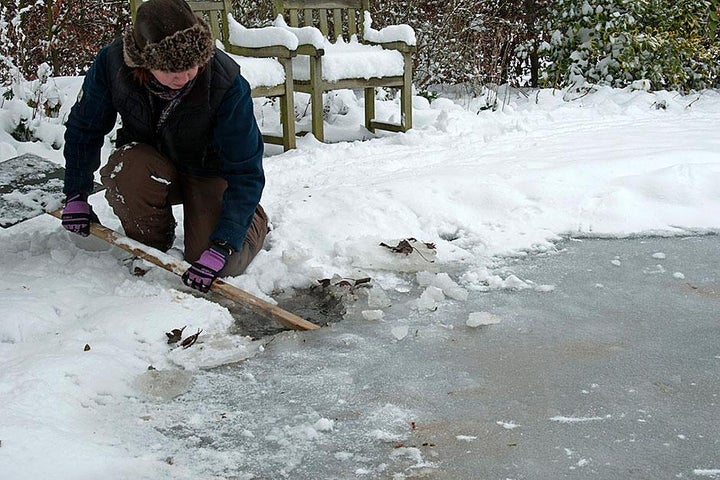
Look after your pond and its wildlife over winter with the following tips:
- If your pond freezes over, take action if it contains fish, as oxygen levels can drop. Melt some of the ice by placing a hot pan on the surface, or consider a bubble fountain or pump to add movement and raise oxygen levels. Floating a ball on a pond in cold weather can also delay freezing (but make sure it doesn’t risk attracting children onto the ice). Never smash the ice, as the shock waves can harm fish. Keeping some of the pond ice-free also gives wildlife access to fresh drinking water
- Circulating the water with a pump helps to improve oxygen levels, which benefits both amphibians and fish, particularly in deeper ponds where oxygen doesn’t diffuse readily through the water
- Ensure plenty of light reaches the pond by pruning back overhanging branches and brushing off any snow. This will allow submerged plants and algae to continue to photosynthesise and replenish oxygen levels in the water. Consider adding more oxygenating plants in spring if you don’t have many
- Check the water level – if it drops in winter, it may indicate there’s a leak. Butyl rubber liners and fibreglass moulds can often be repaired – kits are available from specialist suppliers