

How to prevent sun damage to your skin
The sun does a great deal of good – but, if sunlight could be packaged and sold in the high street, it would have to carry this advice: “Warning by HM Government: The Sun Can Seriously Damage Your Health!”
Cancer Research UK announced that melanoma skin cancer cases in the UK have reached a record high, surpassing 20,000 in a single year for the first time. It tells us that nearly 9 out of 10 cases in the UK are caused by too much UV radiation from the sun and sunbeds. The British Association of Dermatologists (BAD) (which points out that every year over 230,000 new cases of non-melanoma skin cancer – the most common type – are diagnosed in the UK) states that while most people are aware of the link between UV exposure and skin cancer, this knowledge does not translate into safer habits, leaving many with an “unhealthy relationship with tanning.”
Social media is awash with misinformation – for example, there are claims that the rise is due to use of sunscreen lotions. Approved sunscreen ingredients are not carcinogens. Regulatory and health bodies like the NHS and Cancer Research UK confirm that approved sun creams are safe, non-carcinogenic, and highly effective at preventing skin cancer. For NHS advice on sunscreens and sun safety, see: https://www.nhs.uk/live-well/seasonal-health/sunscreen-and-sun-safety/
There is also a claim that sunscreens stop you synthesising vitamin D – but they do not block 100% of UV rays and studies show daily sunscreen users maintain healthy vitamin D levels.
My greatest concern is for those dependent on adults making responsible choices based on firm evidence on their behalf. Having sunburn during childhood or adolescence significantly increases the chances of developing melanoma later in life – and parents who smear their kids in beef tallow or coconut oil in the mistaken belief that they offer natural protection against sun damage are doing great harm.
COSMETIC DAMAGE. We live in an age in which great attention is paid to appearance. Total annual consumer spending on cosmetics and makeup alone in the UK is estimated at £6.4 billion, while the wider beauty and personal care industry is estimated to reach over £30 billion per year – and yet many completely block out the damaging cosmetic effect sunlight can have on the skin.
One example is 69-year-old truck driver, William McElligott, who spent 28 years on the road. His photo was featured in the New England Journal of Medicine because it demonstrates “unilateral dermatoheliosis” (in other words, severe sun damage on one side).The reason is that window glass blocks UVB rays (which cause sunburn) – but it lets UVA rays (which cause deep aging and skin damage) pass right through.
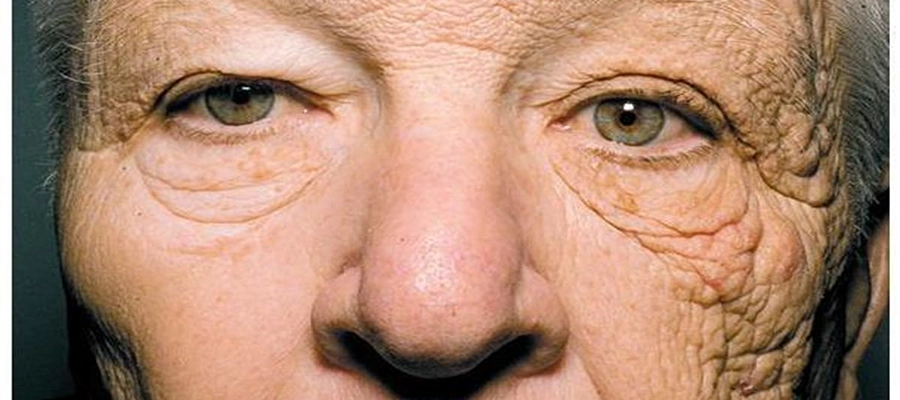
William McElligott – showing sun damage on one side of his face
William’s left side faced the driver’s window, resulting in thick, heavily wrinkled, and sagging skin. Chronic sun exposure destroyed the skin’s elastic fibres and collagen layers over decades. The right side of his face, however, remained protected inside the truck cab … so it looked much smoother and younger.
While we’re on the subject of lorry drivers … here’s an interesting digression. If you don’t know what side of the road they drive on in Australia, you could work it out from the data on incidence of melanomas on lorry drivers’ arms because they spend long hours with one arm exposed to sunlight next to the window of the cab. In countries where people drive on the left, drivers sit on the right side of the vehicle, exposing their right arm to intense UV radiation. Australia has a significantly higher incidence of skin cancers and melanomas on the right arm of drivers, thereby demonstrating that they drive on the left side of the road.
Returning to the subject under discussion – photoaging – here are some more examples:
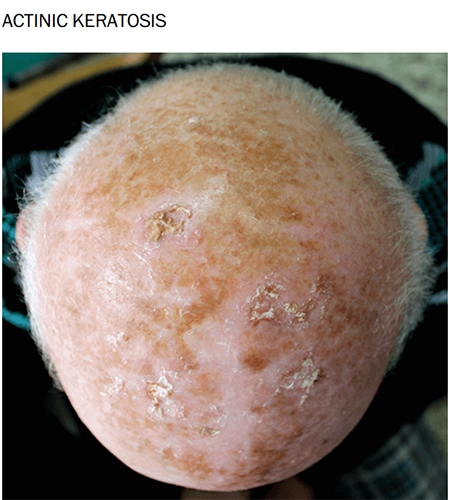
Actinic Keratoses (AKs) are precancerous skin patches caused by years of damage from the sun or tanning beds. They feel rough or dry like sandpaper and appear on areas of the body that get a lot of sun. They’re very common in individuals with fair skin, red or blonde hair, and light eyes – in Scotland they call them ‘peely-wallies’. People with these physical traits lack dark pigment (melanin) to protect their skin, meaning they burn easily and suffer high cumulative sun damage over time.
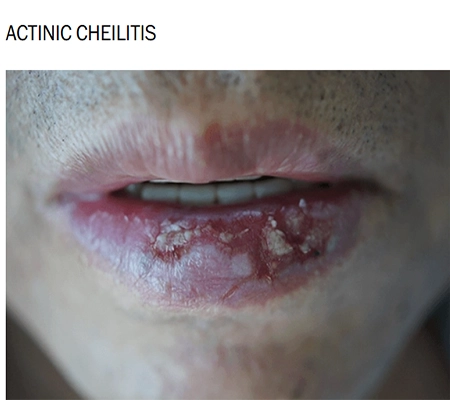
Actinic cheilitis, also known as farmer’s lip or sailor’s lip, is a precancerous lip condition caused by long-term sun exposure. It primarily affects the lower lip, leading to persistent dryness, scaling, and cracking.
Solar lentigines are flat, brown skin spots commonly known as age spots or sun spots. They are caused by long-term sun exposure and appear on areas like the face and hands. These are generally permanent marks.
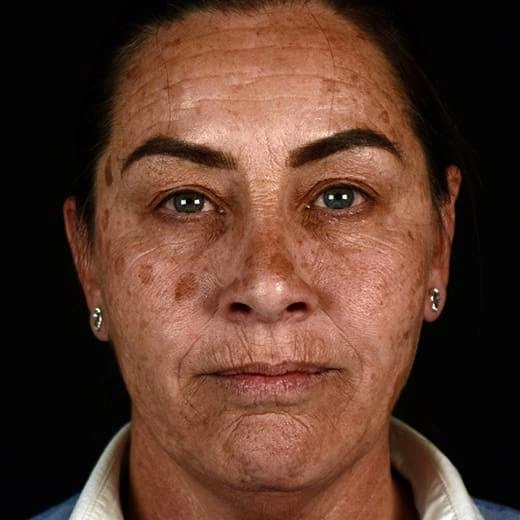
‘Sun spots’
If you’re still in any doubt about the adverse effects of the sun, don’t take my word for it … do your own research. The arms of elderly women often bear testament to the difference between the effects of natural genetic aging over time and, on the other hand, normal aging plus chronic UV radiation – so take on the mantle of Sherlock Holmes and lookout for these changes. Women are more at risk because oestrogen plays a massive role in maintaining skin moisture, thickness, and collagen production. Following menopause, a rapid drop in oestrogen accelerates natural skin thinning and dryness. When this natural depletion hits skin that has already been structurally compromised by decades of sun exposure (the outer arm), the visible damage multiplies.
As I mentioned before, UV rays degrade the skin’s architecture over time. In the outer arm, UV light breaks down collagen and creates an accumulation of abnormal, useless elastic tissue – a process called solar elastosis. Because the inner arm is naturally shielded against the torso, its collagen network remains largely intact, keeping the skin structurally sounder despite the passage of time
Men’s arms aren’t altogether immune to sun damage, however. Ctrl & click on this link to watch a very short video in which a medic demonstrates changes in skin colour and skin thinning – https://www.instagram.com/reel/DEn_tHRun2a/
As for advice on preventing sun damage – which will become even more of a problem as the summers get hotter – do something – and anything is better than nothing.
‘SunSmart’ behaviours (like ‘slipping, slopping, slapping’ on sunscreen) are advised as part of a package of ‘common sense’ measures. Seeking shade greatly reduces risk … the Australian advice is : “Stay under a tree from 11 until 3.” And wear ‘hats like plates’ and long sleeves. This may sound a bit ‘killjoy’ … but when you’re 90 and still looking beautiful, you’ll thank me!
Dr John Cormack
With thanks to the New England Journal of Medicine and Westlake Dermatology for the photos.