
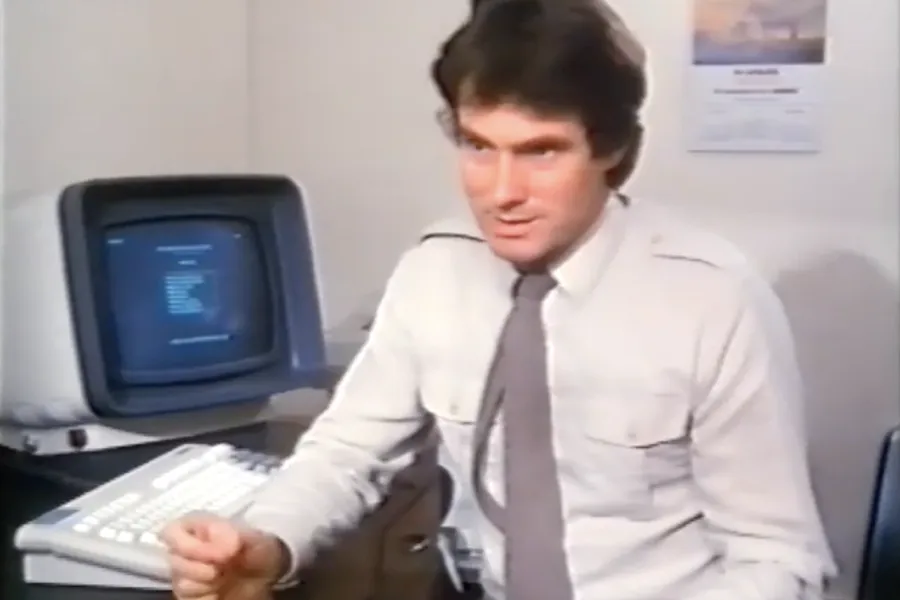
I mentioned that we had a visit from an ‘independent’ practice manager’.
This was a suggestion made to the PCT by the Local Medical Committee (a ‘body’ that represents doctors). The objective was to get somebody to take an unbiased look at the practice and make constructive criticisms – which we welcomed. The downside was that, having said we would select a suitable candidate, we were then told by the PCT that we would not be given any choice over which practice manager would visit … and we then got a letter from the Chief Exec which basically said: ‘The choice has been made for you. Take it or leave it.’
This was a bad start but we didn’t have anything to hide and we didn’t have anything to lose – so we went ahead on this basis. Our expectations were modest – we hoped that she might be able to spot a few problems and might help us to claim something in the region of an additional £2,000 to £4000 per year … but that she couldn’t do anything about the fundamental problem (which was that the practice had been programmed to fail by the previous PCT.) This was pretty well what happened.
The practice manager (Debbie) turned up and appeared very professional, very friendly and, most important of all, honest. We had a long discussion which was helpful.
We did take one precaution because, before Debbie visited, we came across an example of the PCT taking ‘artistic licence’ with the minutes of a meeting … and by that I don’t mean they just corrected a few typos. We, therefore, thought that this might be a possibility in our case. We also assumed that she’d be told exactly what she should write – and, as I say, our expectation was that, whatever she sent to the PCT by way of hard copy, it would be ‘edited’ before it was distributed. I therefore asked her if I could record an interview – and to my surprise she agreed. On the video she said what she thought rather than what she’d been told to say. We played the game … and did not let it be known that she had recorded this interview until after she had been paid by the PCT. We did ‘go on a bit’ so here is just the end of the interview – the conclusions – in unedited form. (To watch, double click on the hyperlink – or go to: https://youtu.be/TmoGYbP703g)
One subject we raised was IT. For those of you who are fascinated by boring computer stories, read on. Those who aren’t – skip the next three paras, One of our pet gripes was that, since 2004, we’d had to put up with a very inferior computer system. When my practice reopened (in the eyes of the PCT) it took them about a year to re-establish the computer system in anything like a fully workable form … despite the fact that the practice had previously been computerised so all the connections and screens were in place. (The PCT had managed to get the its own practices computer system set up from scratch within the space of around 24 hours) By this time nearly all of the record keeping and much of the communication was computerised – so this adversely affected every aspect of our working day. I had sent the PCT a video showing the Heath Robinson quality of the equipment we had been given. We’d had to ‘bolt’ a second server (supplied by the ever helpful Bob Spence) onto the grossly inadequate one we’d been supplied with (bearing in mind that all patient data was at that time stored on the server)
By the time Debbie arrived we had been supplied with a new server but, even then, the connection was such that the system verged on being unusable during working hours. The reason was that the ‘supply’ had been installed ‘on the cheap’ – so it came into the town centre Health Clinic … and from there a cable took the computer traffic to Brickfields Surgery next door, and thence to the dental practice and pharmacy … and it finally ended up with us. Being at the end of the chain, when everyone was trying to use the same line, it slowed down to a snail’s pace. What is more the health clinic staff didn’t like the gismo that the supply fed into – they said it made the room in which it was installed too hot and noisy – so, on the occasions when they had to work there, they sometimes switched it off and we lost the connection altogether.
Meanwhile the NHS was putting increasing emphasis on computerisation. An example was ‘Choose & Book’ – meaning patients could choose where and when they would be seen and the appointment could be made instantaneously … in theory. When the staff were given ‘Choose and Book’ training, the trainer wrote in exasperation: “Slowest system I have come across. Unusable.” Because there were financial penalties for those who didn’t use the new system we had to bring staff in during the evenings, or at the weekends, when there was nobody else using the line in order to do these referrals. All in all, then, this was a real life example of the situation portrayed in the classic ‘Bird and Fortune’ sketch about NHS computerisation.
In summary (for those who hate long boring stories about ‘technical equipment’), the computer is the lifeline of a modern medical practice. The installation and running of these has been taken over by NHS ‘management’ – so, in cases where management is, at best, incapable of doing the job and, at worst, actively obstructive, it makes providing a decent service to patients extremely difficult.. If nothing else this gives you a sense of the vast amounts of time and energy which should have been devoted to patient care but was instead wasted on trivia.
So, was it all doom and gloom. Not at all. The practice was an enjoyable place to work. The atmosphere was pleasant and patients were very appreciative as witnessed by the ‘friends and family forms’ the NHS asked them to fill in.
Dr John Cormack