
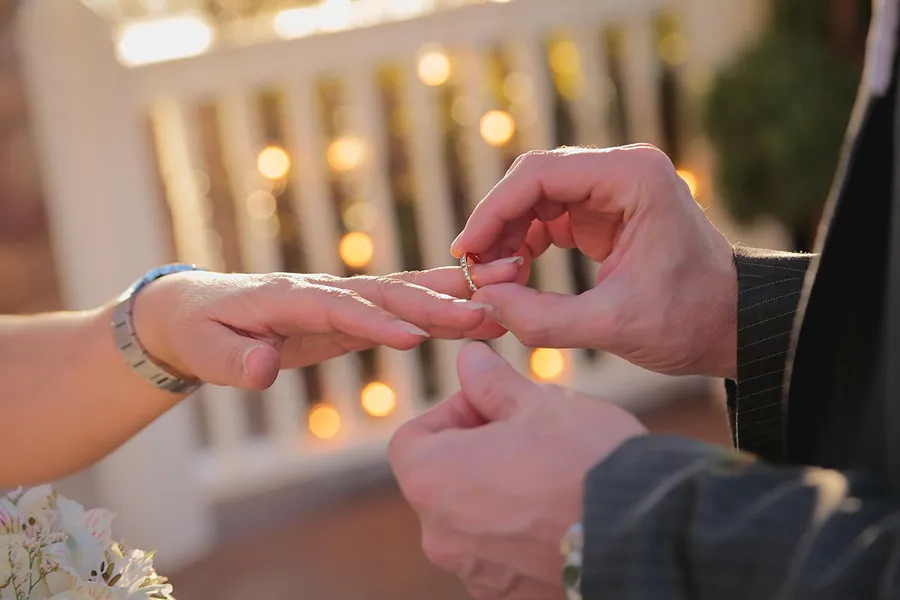
Taking that giant step of marriage is the next chapter in your life with the person you love, but did you know that it impacts your Will?
That’s because if you’ve made a Will before getting married, it becomes void under the marriage laws in England and Wales unless you’ve put specific provisions in place.
However, people do not realise this is the case and can lead to your wishes not necessarily being fulfilled as you intended. This lack of understanding was highlighted in a recent Will Aid survey, which found 56 per cent of participants were unaware that their Will becomes void when they get married.
What happens to my estate after I get married?
Your Will is instantly revoked because of the legally binding contract you have entered into with your spouse.
Under the regulations, unless you make a new Will after marriage, the law decides who inherits your estate through the Rules of Intestacy.
Your estate value will need to meet a certain threshold and the rules do account for any children you have.
Under the rules of intestacy, if your estate is worth £322,000 or less, your entire estate will go to your spouse.
For estates above £322,000, your spouse will claim the first £322,000, with the outstanding figure split equally between your spouse and children.
So, let’s say your estate is worth £500,000. The first £322,000 would go to your spouse and the remaining £178,000 would be shared equally between your children and spouse.
It’s important to note that the Rules of Intestacy only apply to biological children.
You would need to create a new Will to include any adopted or foster children if you want them to benefit from your estate.
Can my Will stay valid after marriage?
Your Will can still be valid after marriage, provided it has been made “in contemplation of marriage”.
In your Will, you would need to state your marriage intentions, name your spouse and clarify that you don’t want your Will to be revoked.
It ensures your assets are protected and your wishes are fulfilled and if these details are not stated clearly in your Will, it will become void under the law and you will have to make a new one.
What if I remarry later in life?
If you remarry later in life, the principles of Will writing remain exactly the same, you will need to write a new one.
Your current Will is voided and you will need to draft a new one to include all the beneficiaries of your estate.
Under the Rules of Intestacy, if you remarry, your estate would go to your new spouse, meaning your final wishes may not be fulfilled, especially if you’ve planned to leave your estate to your children from a previous relationship.
They wouldn’t inherit from your estate unless you create a new Will and clarify what they will inherit.
If you need support writing a Will, organising your estate or putting measures in place to protect your Will ahead of getting married, the Palmers Law team is here to support you.
We can discuss your plans, outline the best steps for estate planning and give you the tools to put a Will in place that meets your wishes and accounts for all your beneficiaries. Get in touch with our team to see how we can help you organise your estate.
